Almost all people think of AI companies. They think about algorithms, neural networks, and chat interfaces. But they don’t think about the true battleground is infrastructure, the data centers, custom chips, power systems, and networks that make advanced AI possible at scale.
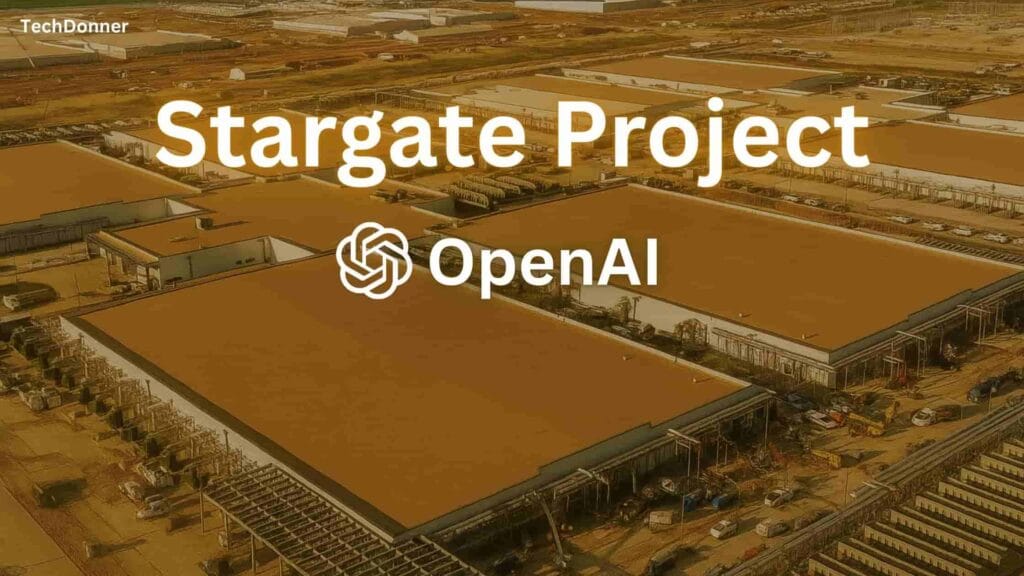
OpenAI has announced the “Stargate Project” that goes far beyond incremental upgrades. They’re aiming to invest on the scale of hundreds of billions (even a trillion-dollar horizon is discussed) to build the physical backbone needed for the next era of AI. This is not just R&D, it’s the industrialization of AI.
What Exactly Is OpenAI Planning?
Here are some of the most concrete pieces emerging so far:
Stargate Project
OpenAI has teamed up with Oracle, SoftBank, and a few partners to launch Stargate LLC, a joint venture focused on AI infrastructure.
The target is to build out a massive network of data centers in the U.S., eventually reaching 10 gigawatts of AI compute capacity and hundreds of billions in investment.
Global expansion to Latin America
OpenAI and Sur Energy have signed a letter of intent to build a $25 billion data center project in Argentina (Patagonia region), with a capacity of around 500 megawatts.
This would be one of their first major steps outside the U.S. and signals global ambitions.
Custom chips & partnerships
To reduce dependence on third-party chip providers (like Nvidia), OpenAI is now collaborating with Broadcom to co-develop custom AI accelerators.
The scale is enormous, and the deal includes plans to deploy 10 gigawatts worth of custom chip-based systems by 2029.
Compute leasing & massive cloud contracts
OpenAI is also making big cloud and compute deals, for instance, leasing large amounts of capacity from Oracle.
These deals help them secure the computer they need now while building their own infrastructure over time.
Financing and scaling revenue
To support this capital intensity, OpenAI is exploring debt raising, new revenue models (e.g., AI tools for governments, agent marketplaces), and becoming a supplier of compute itself.
Their revenue is already in the billions annually, but to sustain what they’re planning, growth must accelerate.
“Gigawatt per week” ambition
CEO Sam Altman has framed the scale in dramatic terms. The vision includes a “factory” that can build one gigawatt of AI infrastructure every week. He described it as possibly “the coolest and most important infrastructure project ever.”
Why This Matters
Why go through all this trouble? Here are the key drivers behind this audacious push:
Compute is the bottleneck
Future AI models demand vastly more compute. At a certain point, ideas matter less if the physical infrastructure to run them is lacking.
Cost & control
Owning more of the stack (chips, data centers, energy) gives OpenAI more control over cost, latency, supply chain risk, and performance.
Competitiveness
If you can out-invest rivals in infrastructure, you can maintain a competitive advantage. Others must catch up.
Strategic leverage
Infrastructure can become not just a cost center, it can be monetized (leasing compute, offering services) and used as a strategic lever in geopolitics.
Addressing energy & sustainability
Building at this scale deals with power grids, renewable energy, cooling, and efficiency improvements, areas that often get overlooked in AI glamour stories.
Challenges, Risks & Skepticism
Of course, setting bold targets is easy; executing them is hard. Some of the biggest challenges OpenAI faces:
Energy & power supply
Even if you build data centers, you need reliable, cheap electricity. As computing scale grows, energy becomes one of the biggest constraints (“silent bottleneck”).
Financing & cash flow
Huge upfront capital is required long before revenue from many parts of the system comes in.
Technological shifts
What if a radically more efficient architecture emerges (e.g., quantum, optical computing, novel algorithms) and makes parts of the infrastructure obsolete?
Logistics, permit, deployment complications
Land, cooling, local regulations, and supply chain delays all add friction when scaling to hundreds of billions.
Overreach/Overcommitment
There’s always a danger in promising more than can be delivered. Some critics see Altman’s framing as overly optimistic hype.
Environmental & social impact
Water consumption, heat, carbon footprint, and large data centers have real environmental trade-offs. Communities may push back.
What This Means for You, Me, and the Industry
For tech companies, this raises the bar for what “infrastructure readiness” means. Startups will need to partner or specialize rather than build everything in-house.
For governments & regulators, this is a wake-up call. AI is no longer just software; it’s heavy industry. Policy on energy, zoning, data sovereignty, and supply chains becomes central.
For talent & jobs, this could create tens of thousands of construction, operations, energy engineering, hardware, and AI-ops roles. OpenAI’s new centers are projected to drive job creation locally.
For users and society, if successful, this infrastructure could unlock more powerful, responsive, and capable AI services. But it also concentrates a lot of power in organizations that control the infrastructure.